Wednesday, October 22, 2014


Monday, September 22, 2014
Bangladesh Guava
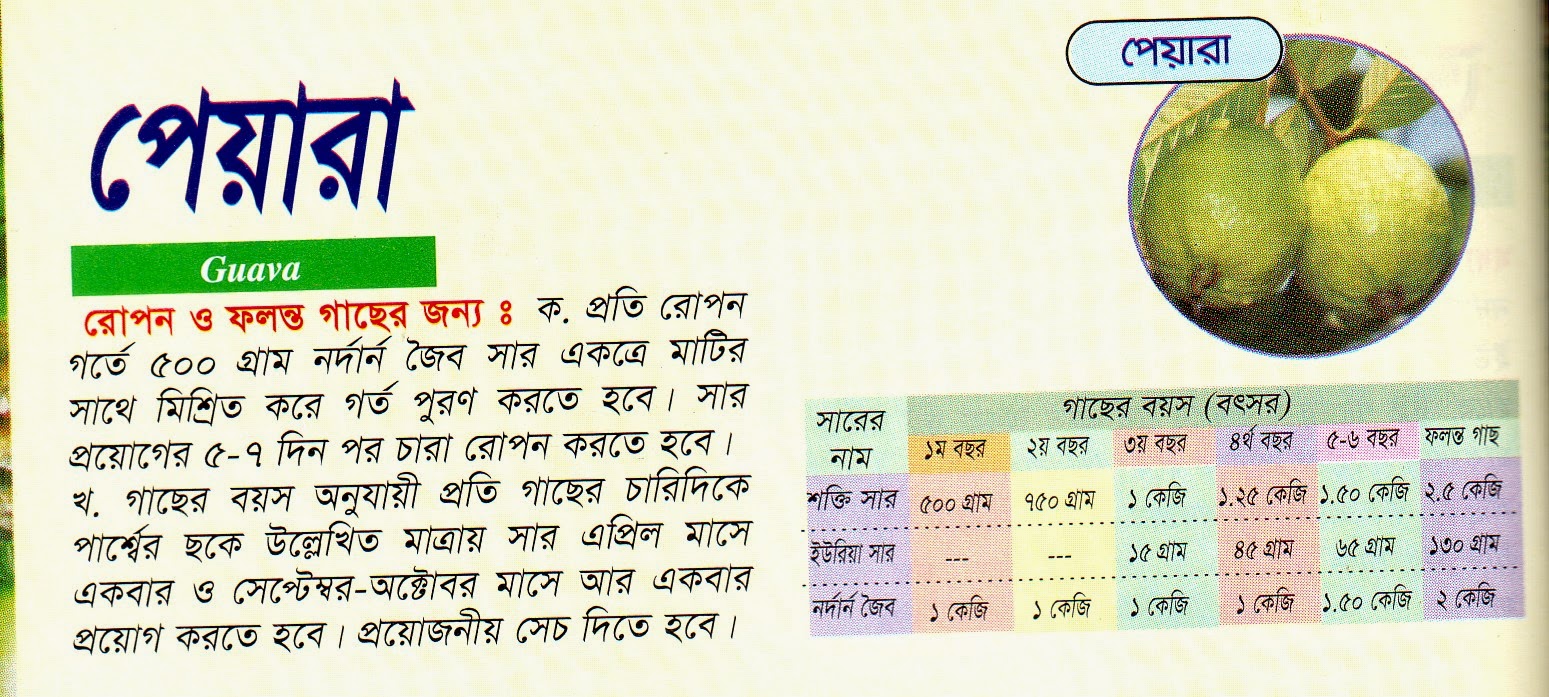

Guava (payara)
a berry like fruit of any of various myrtaceous trees or shrubs of the genus Psidium, especially P. guajava (family Myrtaceae). It originated in
tropical America (Mexico to Peru), where it still occurs in the wild. Guava is
often called the "apple of the tropics". The plant was introduced by
the portuguese to the Indian subcontinent by the
early 17th century. Guava stands fifth in production among the most important
fruit crops of Bangladesh and can be grown all over the country. The annual
production is about 45,000 m tons in an area of about 10,000 ha. The districts
of Barisal, Pirojpur, Jhalokathi, and Chittagong are the main guava producing
areas. Some of the important varieties are known by the name of the places
where these are grown commercially. Thus Swarupkathi is from Barisal,
Mukundapuri from Brahmanbaria and Kanchannagar from Chittagong.
Kazi, introduced from Thailand, is the only standard variety
that has been released by the Bangladesh Agricultural Research Institute. It
produces fruits weighing up to 500 g or even more. All the other varieties have
fruit weights ranging from 100 to 200 g; can be propagated by seed, stem
cutting, budding, grafting and air layering. Mobile -01713479525
https://www.facebook.com/organic.fertilizer.bangladesh
https://www.facebook.com/organic.fertilizer.bangladesh
Wednesday, September 17, 2014
investment agriculture sector bangladesh
Rice Cultivation
Tomatoes and Pepper Cultivation
Vegetable Farming
Fruits Plantation
Pineapples Plantation
Mangoes Plantation
Maize Farming
Fish Farming Business
Sugarcane Plantation
Livestock farming
Seaweeds Farming

Tuesday, August 5, 2014
bangladesh agro processor


Bangladesh is widely known as an agro based country, blessed by both nature and strategic location. Common people are hard- working and resilient.our economic growth was always inclined towards agro sector though it was not seriously looked at for long time.
- The agro-processing Sector soon started blooming and caught attention of the Govt and gained no. one position out of ten Thrust Sectors” depending on the multiplicity of benefits for the people and the nation.
Sunday, April 6, 2014
আমার বাড়ি আমার খামার
One House One Farm is a program of Family
farming and poverty alleviation. Bangladesh is committed to achieve the goal of
sustainable development for all through eradicating poverty and inequalities.
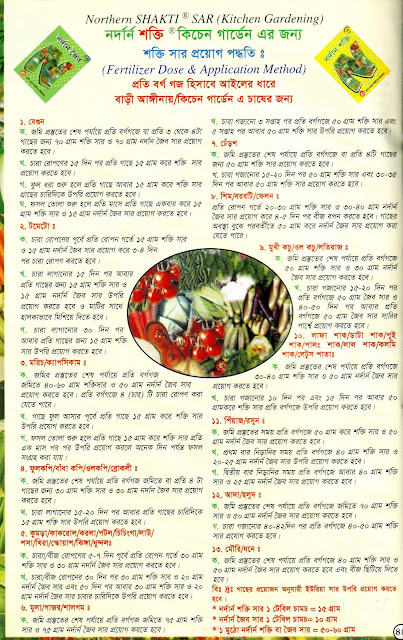

আমার বাড়ি আমার খামার দারিদ্র্য বিমোচন একটি প্রোগ্রাম. বাংলাদেশে দারিদ্র্য ও অসাম্য নির্মূল মাধ্যমে সব জন্য টেকসই উন্নয়ন লক্ষ্য অর্জনে প্রতিশ্রুতিবদ্ধ.

Saturday, April 5, 2014
ছাদে কি কি গাছ লাগাবেন ড্রাগন ফলের চাষ
ছাদে কি কি গাছ লাগাবেন :
ছাদে বাগান করার সময় লক্ষ রাখতে হবে যেন গাছটি বড় আকারের না হয়। অর্থাৎ ছোট আকারের গাছ লাগাতে হবে এবং ছোট আকারের গাছে যেন বেশি ফল ধরে সে জন্য হাইব্রিড জাতের ফলদ গাছ লাগানো যেতে পারে। আম্রপালি ও মলি্লকা জাতের আম, পেয়ারা, আপেল কুল, জলপাই, করমচা, শরিফা, আতা, আমড়া, লেবু, ডালিম, পেঁপে, এমনকি কলা গাছও লাগানো যাবে। ছাদ বাগানের প্রথম শর্ত হচ্ছে, গাছ বাছাই। জেনে, বুঝে, বিশ্বস্ত নার্সারি, বন্ধুবান্ধবের কাছ থেকে গাছ সংগ্রহ করতে হবে। বেঁটে প্রজাতির অতিদ্রুত বর্ধনশীল ও ফল প্রদানকারী গাছই ছাদ বাগানের জন্য উত্তম। বীজের চারা নয়, কলমের চারা লাগালে অতিদ্রুত ফল পাওয়া যায়। আজকাল বিভিন্ন ফলের গুটি কলম, চোখ কলম ও জোড় কলম পাওয়া যাচ্ছে। ছাদ বাগানের জন্য এসব কলমের চারা সংগ্রহ করতে পারলে ভালো হয়। টবে আমের মধ্যে আম্রপালি, আলফানসো, বেঁটে প্রজাতির বারোমেসে, লতা, ফিলিপাইনের সুপার সুইট, রাঙ্গু আই চাষ করা যেতে পারে। লেবুর মধ্যে কাগজিলেবু, কমলা, মালটা, নারকেলি লেবু, কামকোয়াট, ইরানিলেবু, বাতাবিলেবু (অ্যাসেম্বল) টবে খুবই ভালো হয়। এ ছাড়া কলমের জলপাই, থাইল্যান্ডের মিষ্টি জলপাই, কলমের শরিফা, কলমের কদবেল, ডালিম, স্ট্রবেরি, বাউকুল, আপেলকুল, নারিকেলকুল, লিচু, থাইল্যান্ডের লাল জামরুল, গ্রিন ড্রপ জামরুল, আপেল জামরুল, আঙ্গুর পেয়ারা, থাই পেয়ারা, ফলসা, খুদে জাম, আঁশফল, জোড় কলমের কামরাঙা, এমনকি ক্যারালা ড্রফ প্রজাতির নারিকেলের চাষ করা যেতে পারে। সঠিক মানের চারা হলে এক বছরের মধ্যেই ফল আসে। আজকাল বিদেশ থেকে উন্নত মানের কিছু চারা কলম দেশে আসছে। ছাদ বাগানের সাধ পূরণ করার জন্য এসব সংগ্রহ করে লাগাতে পারেন। বাহারি পাতার জামরুল, পেয়ারা, সফেদা গাছও বিভিন্ন নার্সারিতে এখন কিনতে পাওয়া যাচ্ছে। ছাদে এসব গাছ লাগানো হলে ছাদ বাগানের সৌন্দার্য বৃদ্ধি পায়
Dhaka has been moving towards urban
agriculture. Many facets of agriculture are taking quite strong shape in Dhaka
in order to earn money by the hitherto unemployed city dwellers. The demands of
city agricultural products can be met through urban and semi-urban agricultural
practices. These demands in fact led to development of small-scale urban
vegetable, floriculture and horticulture gardening, poultry, fisheries and
livestock production.
Floriculture is an important aspect of Dhaka
daily life. Every day there are marriages, birthday parties, meetings etc.
where flowers are essential to grace the occasion. Growing markets have also
sprung up in different corners of the city to cater the needs of the city
dwellers. It creates a lot of job opportunities for the hither unemployed
people and brings money to improve their livelihood. To meet the demand of the huge population of Dhaka, a vast quantity of fruits is needed. To meet the demand and earn money out of selling fruits, fruit plantations have developed in a small scale in the city as well as in the periphery in a scattered way.
Demand for fresh vegetables is increasing in Dhaka, a part of which can be met by growing vegetables in the city itself. Demand for poultry, meat and eggs is growing in the city. It is a lucrative business and brings good money for the people engaged in the business. Ample scope is there to further widen the poultry business in the city. Mobile-01713479525


Tuesday, March 25, 2014
differences between natural and fortified organic fertilizer
Natural organic fertilizers are naturally decomposed plant residues
or animal manures (with or without natural activators)
incorporated into the soil as additional fertilizer. They
usually contain 1-3% plant food.
Fortified organic fertilizers are natural organic fertilizers enriched
with microbial inoculants, hormones, chemical additives or inorganic fertilizers
to increase their nutrient content or further enhance material
decomposition. They contain around 7% of total plant food.
https://www.facebook.com/organic.fertilizer.bangladesh
with microbial inoculants, hormones, chemical additives or inorganic fertilizers
to increase their nutrient content or further enhance material
decomposition. They contain around 7% of total plant food.
https://www.facebook.com/organic.fertilizer.bangladesh
Subscribe to:
Posts (Atom)